
How to Choose the Right Merch Suppliers for Your Australian Business or Event
Discover how to find and evaluate merch suppliers in Australia for your business, team, or event. Expert tips on quality, pricing, and ordering.

Written by
Scarlett Wood
Industry Leadership
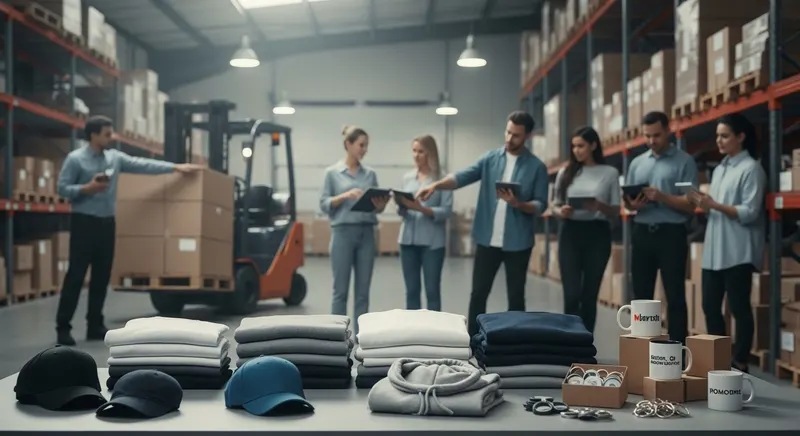
Finding the right merch suppliers can make or break your branded merchandise campaign. Whether you’re a Sydney-based corporate team preparing for a major product launch, a Melbourne event organiser pulling together conference swag bags, or a Brisbane retail brand building customer loyalty through custom gear, the supplier you choose will directly impact your product quality, delivery timelines, and overall budget. With hundreds of options across Australia, knowing how to evaluate and select the right partner is one of the most valuable skills you can develop when managing branded merchandise projects.
What Do Merch Suppliers Actually Do?
Before diving into selection criteria, it’s worth clarifying what merch suppliers offer and where they sit in the supply chain. In Australia, the term “merch supplier” typically refers to companies that source blank or semi-finished promotional products — often from manufacturers in China, Taiwan, or locally — and then apply your branding through decoration methods such as screen printing, embroidery, sublimation, laser engraving, pad printing, or heat transfer.
Some suppliers operate purely as wholesalers, meaning they work exclusively with resellers and agencies. Others are direct-to-business operations, allowing corporate clients, sporting clubs, schools, and event organisers to place orders without going through a third party. Understanding this distinction matters because it affects your pricing, communication experience, and the level of creative support available to you.
Many suppliers specialise in particular product categories. You’ll find some that focus heavily on custom apparel — everything from graphic tee shirt printing to tour merchandise shirts — while others build their reputation around promotional items for trade shows, corporate gifting, or eco-friendly merchandise. Identifying what type of supplier best aligns with your project needs is an important first step.
Key Factors to Evaluate When Comparing Merch Suppliers
Product Range and Category Depth
A high-quality merch supplier should offer a broad and well-curated product range. This matters because branded merchandise campaigns rarely involve just one item. An event organiser in Adelaide running a large conference, for example, might need trade show promotional items, branded drinkware, lanyards, and tote bags — ideally sourced from a single supplier to simplify logistics and reduce freight costs.
Look for suppliers that carry:
- Custom apparel: t-shirts, polos, hoodies, caps, and hi-vis workwear
- Drinkware: keep cups, reusable water bottles, and branded mugs
- Bags: tote bags, backpacks, cooler bags, and personalised toiletry bags
- Stationery: branded pens, notebooks, and sticky notes
- Event accessories: wristbands for events, lanyards, and name badges
- Eco-friendly products: bamboo items, bamboo toothbrushes, and sustainable branded products
A supplier with genuine depth across these categories demonstrates ongoing investment in their product offering and is more likely to be a reliable long-term partner.
Decoration Capabilities and Quality
The decoration method applied to your products has a significant impact on the final result. Not every supplier offers every technique, and some are far more proficient in certain methods than others. For garment printing, it’s worth asking whether the supplier uses water-based or plastisol inks — our comparison of water-based vs plastisol ink for screen printed t-shirts explains why this matters for durability and environmental impact.
Embroidery is the preferred method for polo shirts, caps, and workwear because of its premium appearance and longevity. Sublimation suits full-colour, all-over designs on polyester garments and hard goods like mugs. Laser engraving works beautifully on metal and wood items, while pad printing is a cost-effective option for small logos on pens, power banks, and similar products.
Ask potential suppliers for samples or production photos demonstrating the quality of their decoration work. Any reputable supplier will be willing to provide these. If they’re reluctant to share evidence of past work, treat that as a red flag.
Minimum Order Quantities and Pricing Structure
Minimum order quantities (MOQs) vary significantly across product types and suppliers. Screen-printed t-shirts commonly have a MOQ of 12 to 50 units, while some embroidered caps can be ordered in quantities as low as six. More complex or specialised products — like custom gym towels or custom tea towel printing — may have higher minimums due to setup requirements.
When comparing pricing, always look beyond the unit cost. Ask for a full breakdown that includes:
- Setup fees (per colour, per decoration location)
- Freight and delivery charges
- GST
- Any artwork revision fees
Bulk pricing tiers are standard across the industry. The per-unit cost drops meaningfully as quantity increases, so if you have flexibility in your order volume, it’s often worth adjusting quantities to hit a better pricing tier. A Gold Coast real estate agency ordering 100 branded polo shirts rather than 75, for instance, might reduce the per-unit cost enough to justify the additional spend.
Turnaround Times and Reliability
Turnaround time is one of the most frequent pain points organisations experience with merch suppliers. Standard production timelines in Australia typically range from seven to fifteen business days after artwork approval, though rush services may be available for an additional charge.
If you’re ordering for a fixed event — a trade show, a product launch, or a sporting finals weekend — communicate your deadline clearly from the outset and confirm it in writing. Ask specifically whether the quoted turnaround time includes freight, or whether it’s production-only. For interstate deliveries from suppliers based in Melbourne or Sydney, freight to Perth or Darwin can add two to five extra business days.
Reliable suppliers will provide realistic timelines, send artwork proofs promptly, and communicate proactively if any delays arise. Reading customer reviews and testimonials is one of the best ways to assess how consistently a supplier delivers on their promises.
Evaluating Supplier Sustainability Credentials
Sustainable procurement is increasingly important for Australian businesses, government agencies, and educational institutions. Many organisations now have internal policies requiring them to favour suppliers that demonstrate ethical sourcing, reduced environmental impact, or certifications such as OEKO-TEX, FSC, or ISO 14001.
When assessing eco-credentials, look for suppliers that stock genuinely sustainable product lines — not just token additions to a catalogue filled with single-use plastic. A supplier worth partnering with will be able to explain the origin of their eco materials, provide certifications on request, and offer products that align with your organisation’s sustainability goals.
This is particularly relevant for categories like sustainable branded reusable products for baby promotions, stationery made from recycled materials, and drinkware designed to reduce single-use plastic consumption.
Red Flags to Watch Out For
Even experienced merchandise managers can fall into traps when working with new suppliers. Here are some warning signs that deserve your attention:
- No physical address or ABN: Legitimate Australian merch suppliers will have verifiable business details. Always check.
- Unusually low pricing with no explanation: Extremely cheap pricing often signals low-quality materials, poor decoration, or hidden fees that appear at checkout.
- Slow or vague communication before the sale: If a supplier is hard to reach or evasive during the quoting stage, expect the same during production.
- No proof approval process: Any reputable supplier will send you a digital proof for approval before going to print. Skipping this step risks costly errors.
- No samples available: For large orders, you should always be able to request a pre-production sample.
Specialist Suppliers vs. General Merchandise Distributors
It’s worth considering whether a specialist supplier or a general merchandise distributor better suits your needs. Specialist suppliers often have deeper expertise in their category — a company focused on trade show display stands and booth display ideas, for instance, will likely offer better advice and quality than a generalist handling displays as one of hundreds of product lines.
On the other hand, general distributors offer the convenience of one-stop shopping, which can reduce administration time and freight costs. For organisations running large, multi-product campaigns — think a Canberra government department sourcing everything from vehicle logo signage to branded tablecloths for events and stickers and promotional notes — a single reliable generalist supplier can be more efficient than managing relationships with five different specialists.
The right answer depends on your campaign complexity, the importance of product quality in specific categories, and the internal resources you have available to manage supplier relationships.
Building a Long-Term Supplier Relationship
The best outcomes in branded merchandise come from ongoing supplier relationships rather than one-off transactions. When a supplier understands your brand guidelines, preferred colours, typical quantities, and quality expectations, they can manage your orders more efficiently and proactively suggest new products that suit your needs.
Invest time in onboarding a new supplier properly. Share your brand style guide, provide PMS colour references, and brief them on any specific requirements — whether that’s sustainable packaging, individual name personalisation, or tight colour matching across different substrates. Suppliers who feel like genuine partners, rather than transactional vendors, tend to go the extra mile when it counts.
For event organisers using event wristbands and promotional items across multiple events throughout the year, maintaining a preferred supplier relationship also makes it easier to reorder quickly, access priority production slots, and negotiate better pricing at volume.
Key Takeaways
Choosing the right merch suppliers for your Australian business or event is a decision that deserves careful thought and due diligence. Here’s a summary of what to keep in mind:
- Assess product range depth: Look for suppliers that can cover multiple product categories to simplify your procurement process and reduce freight costs.
- Verify decoration quality: Ask for samples and production photos before committing to large orders, and confirm which decoration methods the supplier specialises in.
- Understand the full cost: MOQs, setup fees, freight, and GST should all be factored into your budget — never compare suppliers on unit price alone.
- Prioritise reliability and communication: Turnaround time guarantees mean nothing if a supplier doesn’t communicate proactively when issues arise.
- Build long-term partnerships: The more a supplier understands your brand and requirements, the better the results and the more efficiently your campaigns will run.
Taking the time to evaluate your merch suppliers properly is an investment that pays dividends across every branded merchandise project you run — from your next conference giveaway to your annual staff apparel order.